
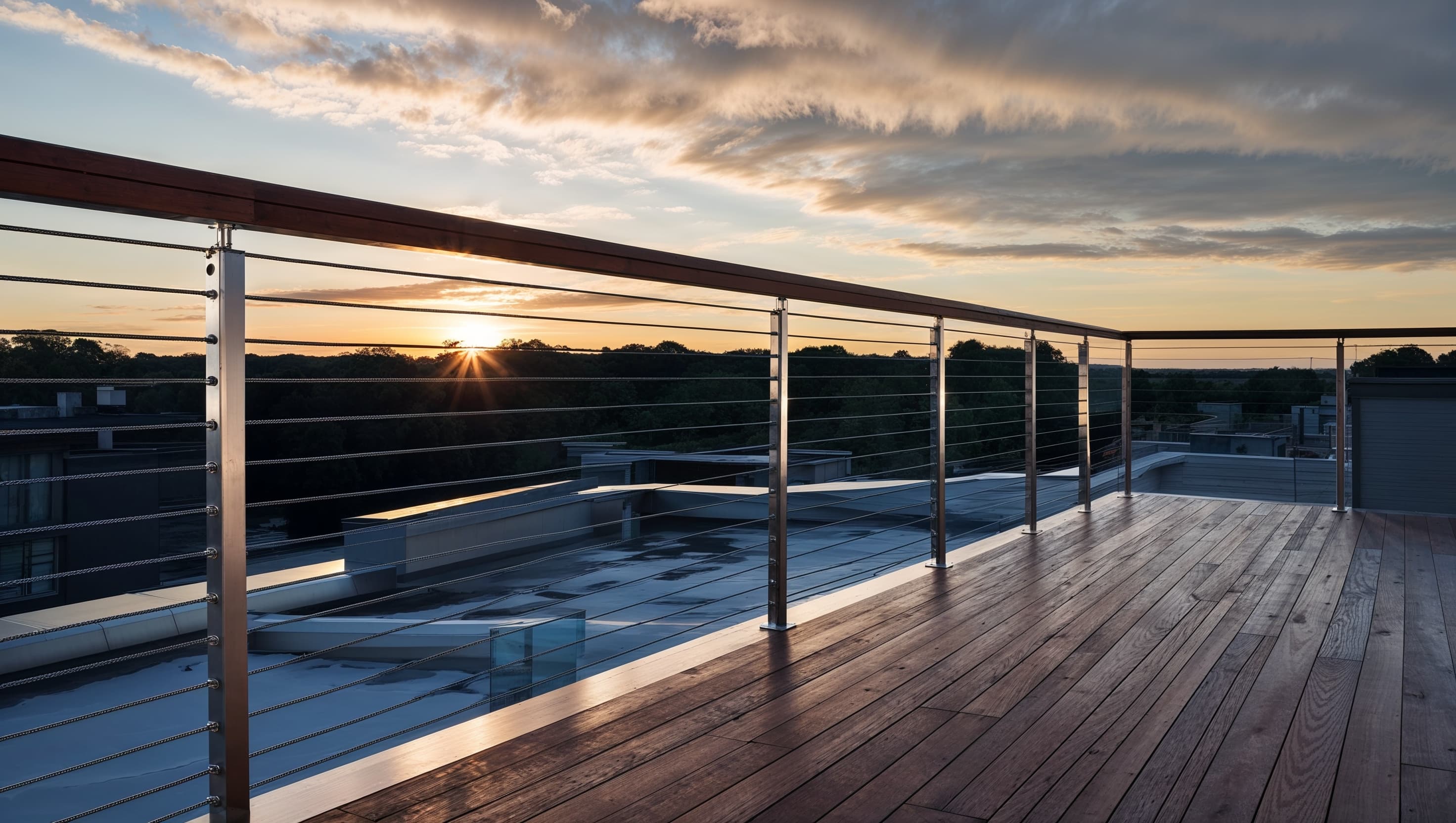
Cable Railings: Pros, Cons, and When They Make Sense
2 min read
The look
Horizontal stainless cable railings deliver the cleanest sightlines of any railing system. On a rooftop deck, balcony, or mountainside home the view is the product.
Pros
- Near-invisible sightlines.
- Modern minimalist aesthetic.
- 316 stainless cables last 30 plus years.
- Compatible with wood or aluminum top rails.
Cons
- Higher cost than aluminum picket ($120 - $180 per linear foot).
- Cables need re-tensioning every 3 to 5 years.
- Not recommended in homes with young climbers.
- Code requires extra-strong posts.
Cost drivers
Short straight runs are cheapest. Corners, stairs, and tight radii drive price up because every bend needs a dedicated cable termination.
Code considerations in NJ
- Posts must resist 200 lbs with cable loads applied.
- Cable spacing must pass the 4 inch sphere rule even when a child tries to pry cables apart.
- Maximum unsupported cable run is typically 4 feet between posts or intermediate spreaders.
Maintenance
- Wipe with soft cloth and mild detergent once a season.
- Re-tension cables every 3 to 5 years with a turnbuckle.
- Check terminations for any corrosion in coastal areas.
When cable is the wrong call
If you have very young kids, a full picket system is safer. If your budget is tight, aluminum picket looks great for half the price. If you are on the immediate coast, glass panel is easier to maintain.
When cable is the right call
Rooftop decks. Modern architecture. Million-dollar views. Clients who prize minimalism.